ServicesFilter replacement and maintenance
Filter Replacement and Maintenance in Grand Prairie
Filter media wears out quietly. We swap cartridges and membranes before they run out of capacity, and we check the housings, valves and fittings that hold them. The same person keeps track of your system from one visit to the next.
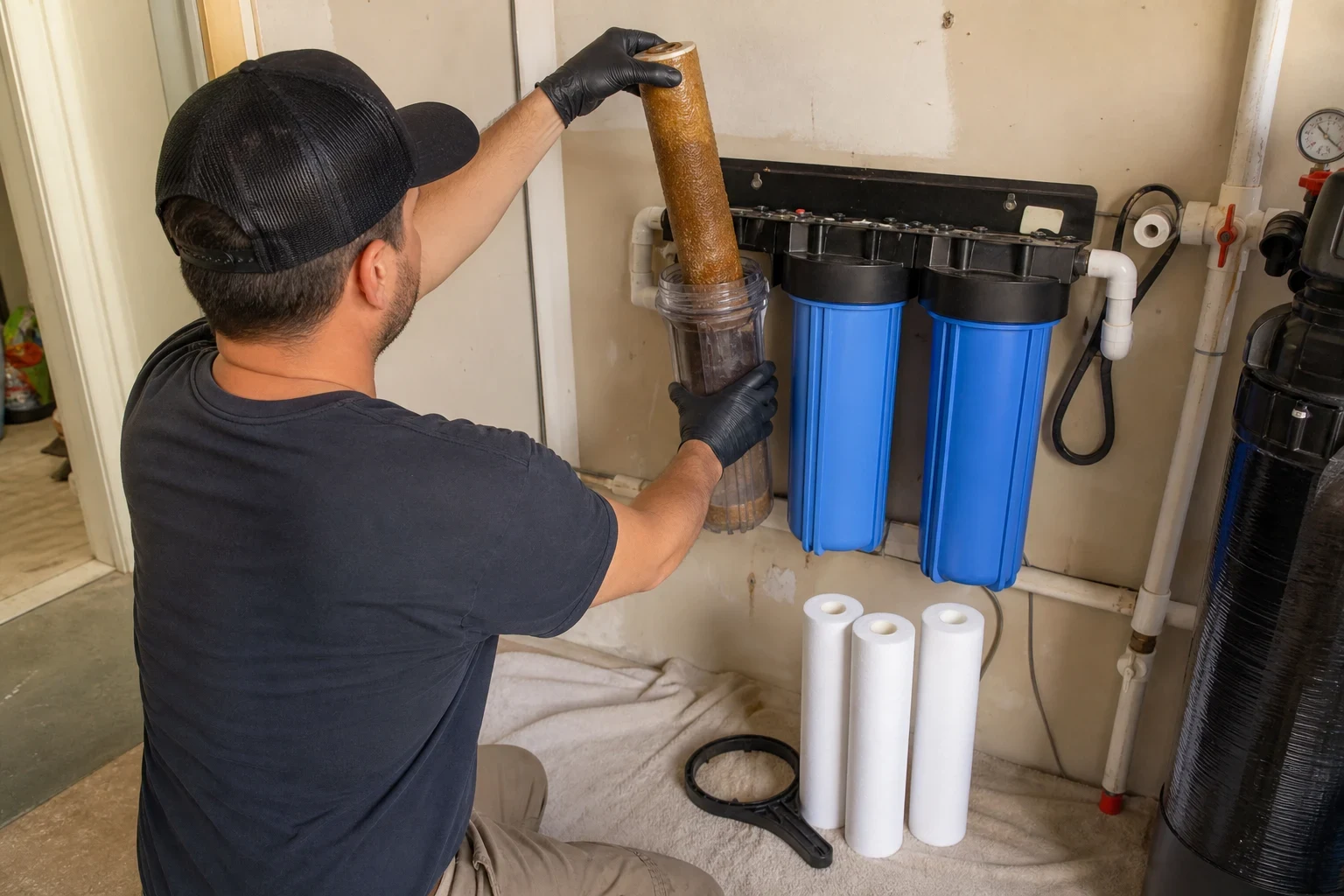
Helping a good system keep performing
Each filter in your house is gradually loading up. Sediment cartridges hold grit until water struggles to pass. Carbon takes up chlorine until its surface is used up, and the taste returns. Reverse osmosis prefilters shield the membrane, and once they clog the membrane wears out sooner and the tank refills more slowly.
Our filter replacement and maintenance visits take care of all this on a schedule set by your equipment and how much water you use. We work on systems we put in and on most standard systems installed by others, including whole-house carbon units, iron and sediment filters, under-sink reverse osmosis and water softeners.
A single person handles everything. The contact who takes your first call keeps your service records, knows which cartridges fit your housings and reminds you when the next change is near.
Inside a typical service call
- Fresh media, matched to the housing
- Spent sediment, carbon and specialty cartridges come out, and new ones go in at the right length and micron rating for each housing. The used ones leave with us in a sealed bag.
- Clean housings and sound seals
- We empty each housing, wash it and sanitize it. The O-ring gets a close look and a thin coat of food-grade silicone. If it has gone flat or cracked we fit a new one, because a worn seal is behind most slow drips.
- Reverse osmosis care
- Pre- and postfilters are changed, the air charge in the storage tank is checked, and the membrane is replaced when its output or the water it makes shows it is time. A full flush follows before anyone drinks from it.
- Softener and bypass checks
- For softeners, we break up any salt bridge in the brine tank, review the regeneration settings and make sure the bypass valve turns without sticking.
- A dated record at the housing and in our files
- A small tag on each housing shows its last service date. We keep the same record on our end, so your next change is planned rather than guessed.
When your filters need attention
Tap water tastes like a pool again
Spent carbon lets the chlorine taste and smell through. Because it returns slowly, many people only notice it once it is strong.
Weaker flow through the house
A clogged sediment or iron cartridge chokes the supply to every fixture. Pressure that has faded over weeks often traces back to the filter.
A trickle from the drinking faucet
When the reverse osmosis faucet barely runs, or the tank takes much longer to recover, the prefilters are usually clogged or the membrane is worn.
Rust-colored or dark cartridges
Heavy orange or black buildup shows a cartridge has been working hard. Stains coming back on sinks and tubs suggest it has passed its limit.
An unknown service date
If a housing has no tag and nobody remembers the last change, that alone is a good reason to have us open it up.
What affects the cost of maintenance
Most of the price is the parts themselves, and cartridges vary widely between brands and filter types. We give you the cost by phone before the visit, based on what you have, and tell you if anything else turns up once we are on site. You decide on any extra work before we do it.
How many stages you have
One sediment cartridge is a modest part. A multistage reverse osmosis set with a fresh membrane is a much larger one, and every added stage adds parts.
Brand-specific cartridges
Some systems take only proprietary cartridges. Standard sizes give you more choice and often lower ongoing cost.
Condition of the housings
Cracked housings, worn O-rings or a sticky bypass valve add parts and time. We show you what we found before replacing anything.
Access to the equipment
A system in an open garage is quicker to service than one wedged behind a crowded sink cabinet or in a tight closet.
How a service visit runs
- 1
A conversation by phone
You tell us what equipment you have and anything you have noticed. If you know the model or can read the label on a housing, that helps us bring the right parts.
- 2
Water off and floors protected
We shut off the supply, set down drop cloths and a bucket, and release pressure before opening anything. Systems in a hot garage get a careful look at plastic housings, since heat can make them brittle over time.
- 3
Replace, clean and inspect
Cartridges come out, housings are cleaned and sanitized, O-rings are checked and new media goes in. We tighten by hand and wrench only as the manufacturer calls for.
- 4
Flush and leak check
New carbon releases fine black dust, so we flush until the water runs clear. We then watch every fitting under pressure before calling the job done.
- 5
Cleanup and next date
We wipe down the area, take the old filters and tell you plainly what we saw and when the next change should be.
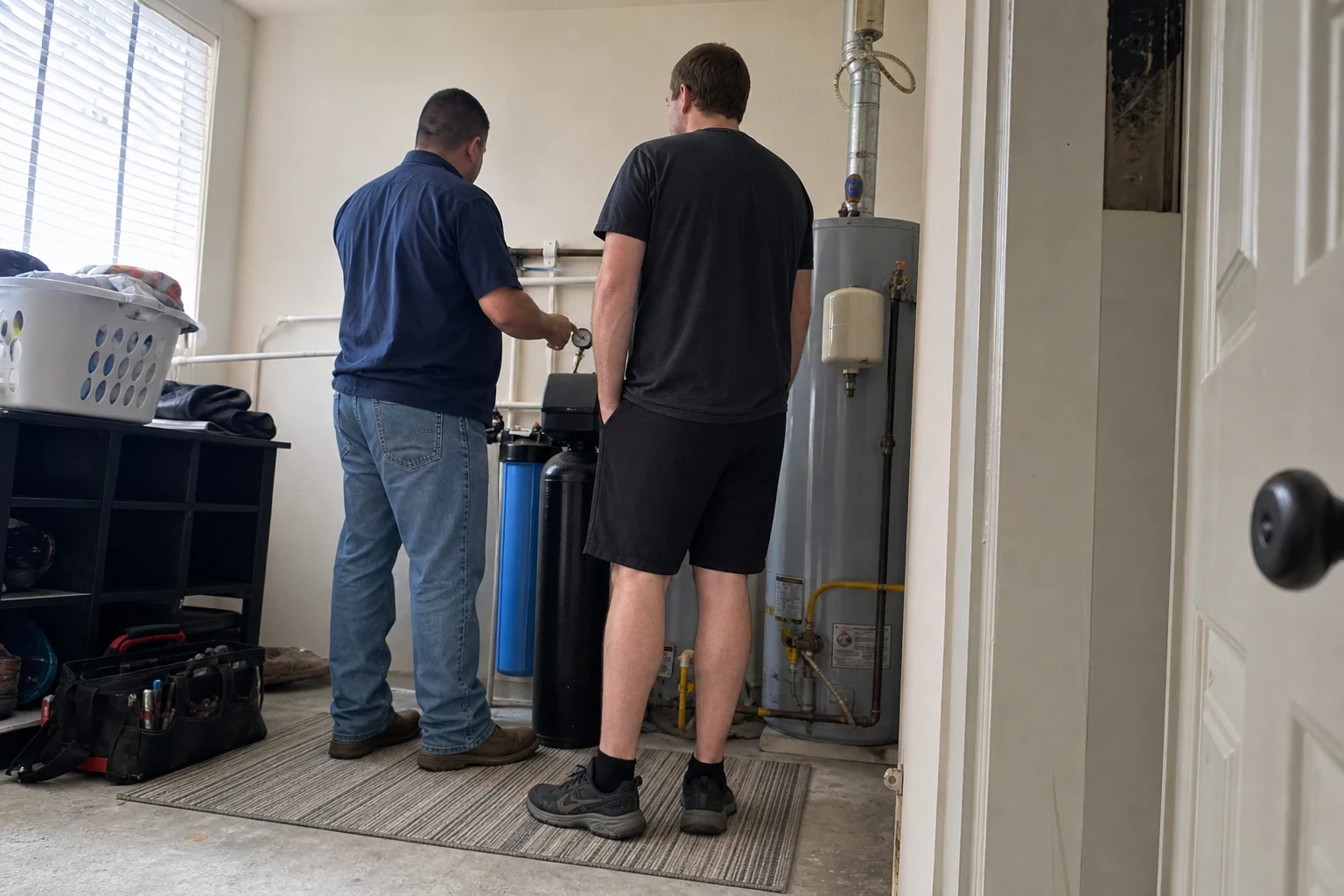
Questions about filter service
What is the right interval between filter changes?
It depends on the type of filter and how much water your home uses. Sediment cartridges often need replacing every few months, carbon tends to last longer, and a reverse osmosis membrane can go a few years. We set your schedule from your actual usage rather than the general interval on the packaging.
Will you work on a system someone else put in?
In most cases, yes. Many whole-house and under-sink systems use standard housings, and plenty of proprietary cartridges are available to us. Mention the brand on the phone and we will confirm before the visit.
Does someone have to be home?
Yes, someone needs to let us in and be around while the water is shut off and turned back on. The visit is usually brief, and the water stays off only while housings are open.
My water looks milky or gray after a change. Is that normal?
A milky look is almost always trapped air, and it clears from a glass within a minute. A gray tint after new carbon goes in is fine dust, which we flush out before leaving. If either lingers, let us know and we will return to check it.
Is a water test needed before routine filter changes?
Not usually. If something about your water seems different, or you wonder whether your setup still fits it, our water testing service can show whether other filters would do a better job.
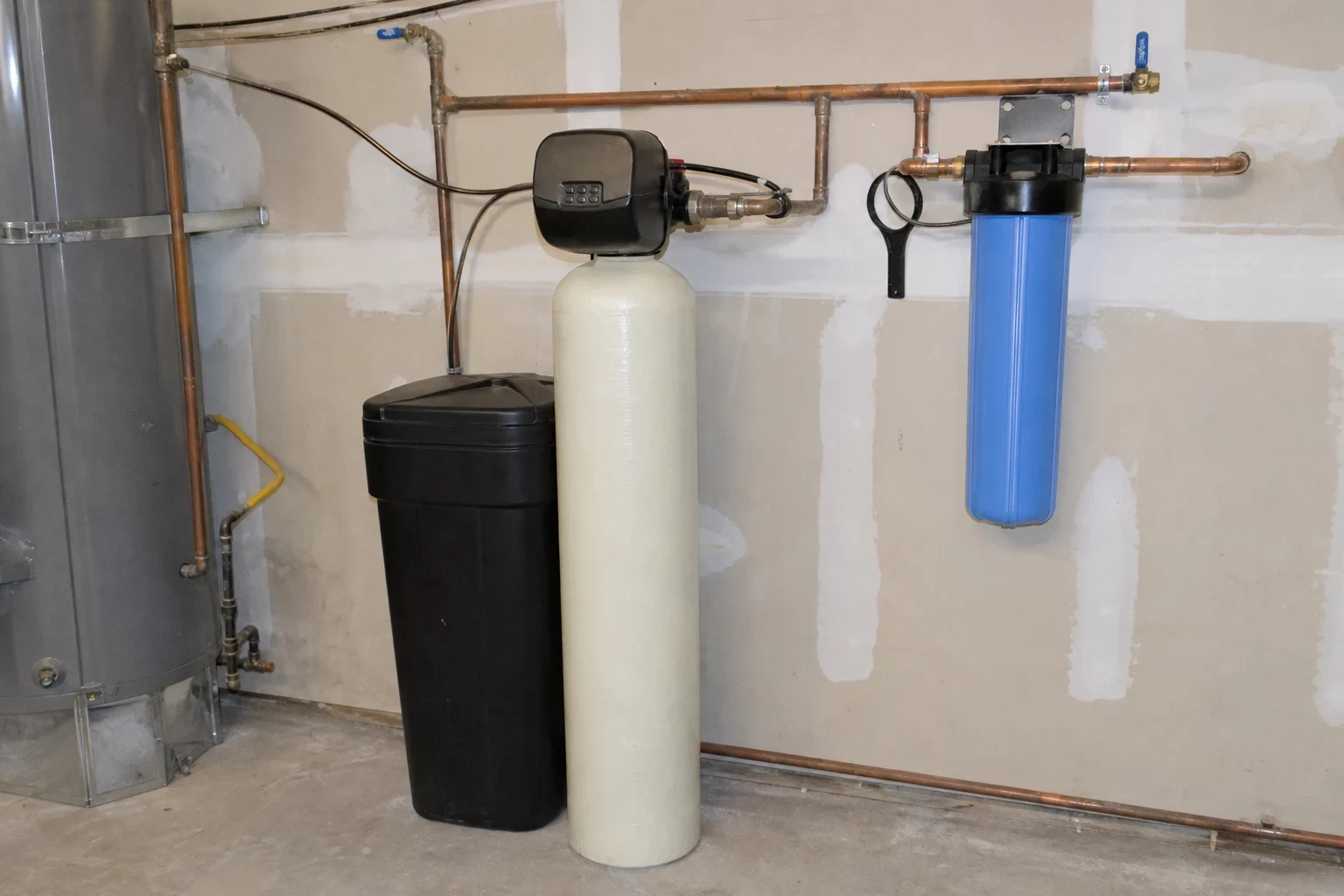
Put your filters on a schedule
Tell us what equipment you have. A call gets you a free water test and a free quote for your filter service.