ServicesWhole-house carbon filtration
Whole-House Carbon Filtration in Grand Prairie
A carbon filter on your main line treats the water before it reaches any faucet, shower or appliance. We test first, size the system to your home and plumbing, and install it cleanly. One person handles your questions from the first conversation to the final walkthrough.
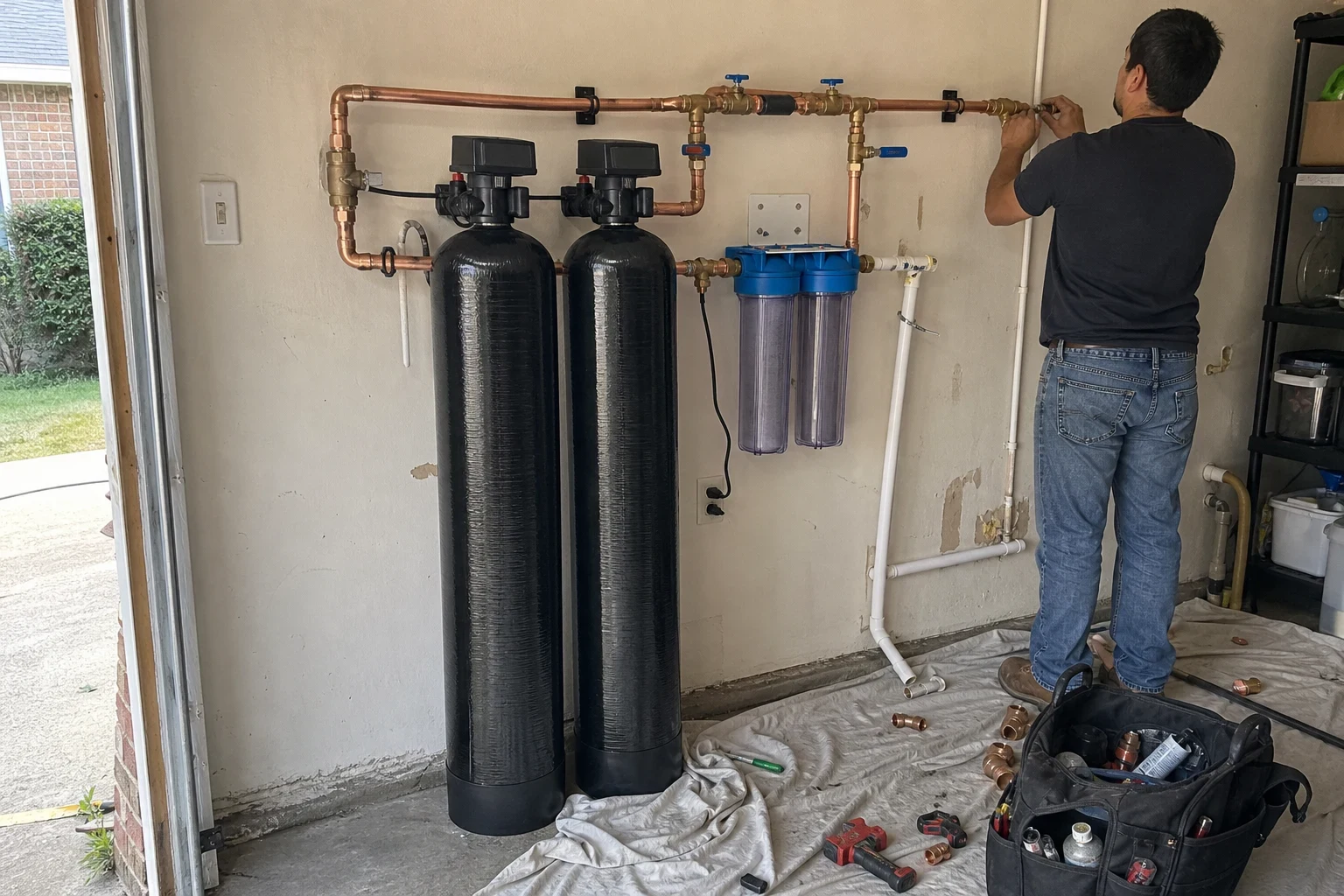
What a main-line carbon filter does for your water
Utilities add chlorine or chloramine so water stays clean on its long run through buried city mains. That disinfectant is the pool-like note you pick up in a kitchen glass or a steamy shower. Activated carbon is full of tiny pores, and those compounds stick to it as water flows through the media bed. Mounted at the point where water enters the house, one system treats your coffee, ice, baths and laundry together.
Choose it when the problem is taste, smell or dry skin after showers in every room. Carbon does not soften water or take out minerals. When a test shows hardness, iron or another issue carbon cannot fix, we say so directly and go over water softeners or iron and sediment filtration with you.
One person stays with you from start to finish. Whoever inspects your plumbing also lays out the choices, books the install and comes back to check the result.
What comes with the installation
Testing comes before sizing
At your tap we measure chlorine, hardness and a handful of other basics. Those numbers tell us which carbon media suits your water and whether the line needs anything more.
Carbon media matched to your supply
Plain granular activated carbon works well on free chlorine. When the utility treats with chloramine, catalytic carbon performs better, so the media we use follows what your water really contains.
A sediment cartridge in front of the carbon
Water first runs through a cartridge that catches sand, grit and bits of old pipe scale. With that debris stopped early, the carbon bed stays clear and lasts longer.
A bypass and a tidy connection to the main
We tie into the main line using fittings made for your pipe, copper, PEX or CPVC, and install a bypass so the house still has water during service. Every joint gets a pressure check before we go.
Shelter for systems installed outside
On many slab homes the main line rises outdoors. When yours does, we fit a cover or enclosure that guards the tank from summer sun and the odd hard freeze.
Signs a whole-house carbon filter makes sense
- A pool smell from the tap
- If a glass of water smells like chlorine, carbon is the most direct answer.
- Showers that leave skin and hair dry
- Hot water releases chlorine as vapor. Filtering at the main line means the shower gets treated water too, not only the kitchen.
- A pitcher filter in the fridge and still unhappy
- Small filters only treat what you pour through them. If you are buying bottled water for cooking or refilling a pitcher several times a day, a whole-house system usually fits your routine better.
- Coffee and tea that taste flat or off
- Disinfectant flavor carries into anything brewed. Many customers notice the difference here first.
- You want drinking water polished further
- Carbon pairs well with under-sink reverse osmosis at the kitchen. The carbon handles the whole house and the RO unit handles the glass you drink from.
How the job runs
- 1
A conversation and a test
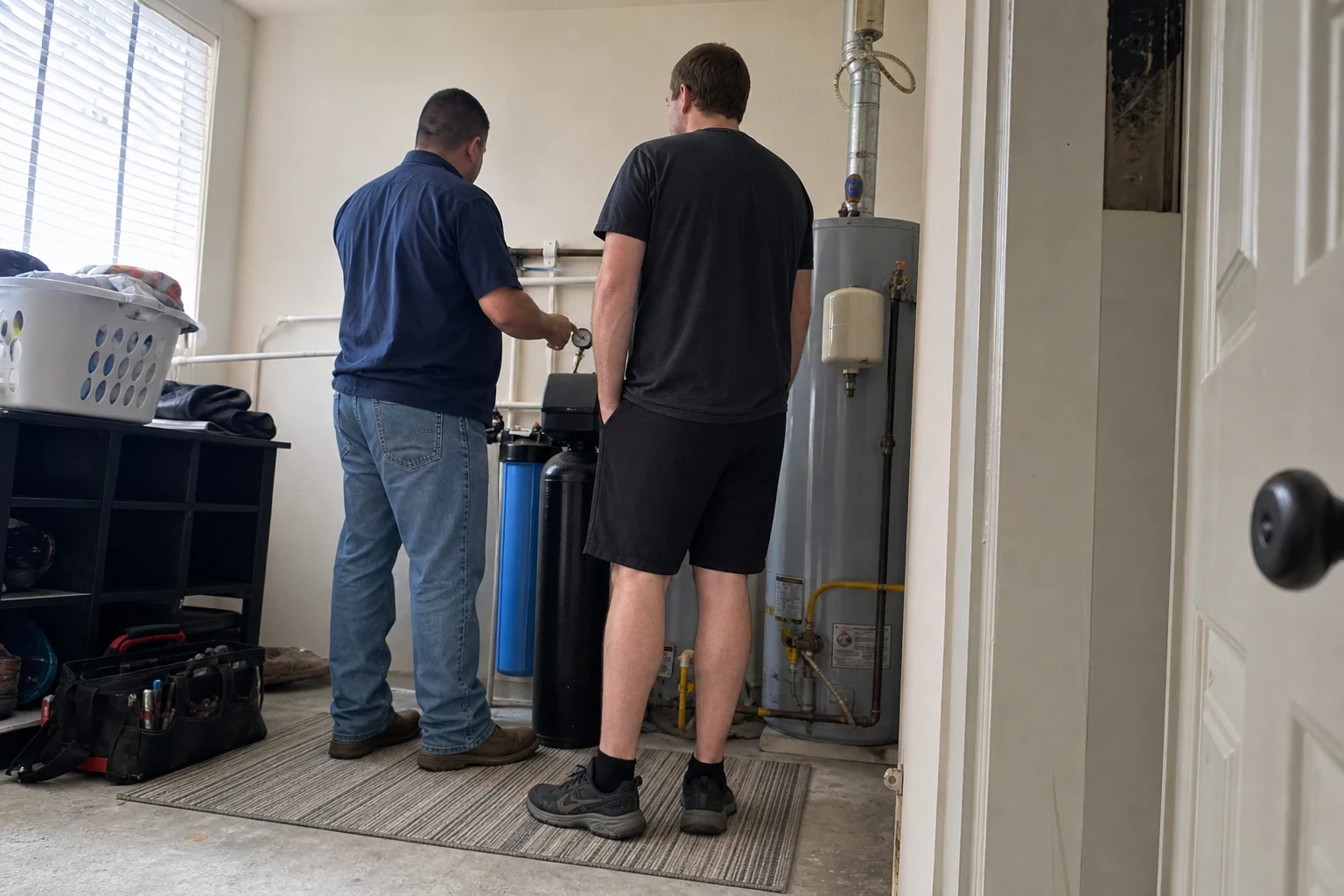
We start with what bothers you about your water, then test at the tap. You get the results in plain language and a written estimate that lists each part.
- 2
Choosing a location
We find where the main line enters, usually in the garage or along an outside wall, and confirm there is room for the tank, the bypass and a drain path for backwashing models.
- 3
The install itself
Expect the supply to be shut off for part of the day, usually a few hours, while the system is plumbed in and mounted. Drop cloths go down first and the work area stays orderly. Any permit question is settled before we arrive, so the tie-in is done to code.
- 4
Flush, test and walk through
New carbon is flushed until it runs clear, then we retest so you can see the drop in chlorine. We show you the bypass, the prefilter and when each part will need attention, and we take every scrap with us.
What affects the cost
Two homes on the same street can need different systems. The price comes down to how much water your household uses, what is in it and how easy the main line is to reach. Your estimate breaks each of these out, so nothing appears later that you did not see first.
- How many people and bathrooms
- A busy household with several showers and a dishwasher running at once needs a bigger tank, so pressure holds up when demand peaks.
- Type of carbon media
- Catalytic media, the better match for chloramine, is priced higher than plain granular carbon. It shows up on your estimate only when the test finds chloramine in your water.
- Tank or cartridge design
- Backwashing tank systems last years between media changes. Cartridge housings cost less up front but need more frequent swaps.
- Where the main line sits
- An open garage wall is straightforward. A line buried at the slab, a tight closet or an outdoor spot that needs an enclosure adds labor and materials.
Questions about whole-house carbon filtration
- Will I notice weaker water pressure after installation?
- Not if the system matches your household. Pressure complaints almost always trace back to a unit that is too small for the home. We size from your bathroom count and how much water you use at the busiest time of day, not from a one-size model.
- How often does the carbon need replacing?
- Tank systems typically run several years before the media is changed, depending on water use and chlorine levels. Prefilter cartridges are changed more often. We cover both on our filter replacement and maintenance page and can handle the schedule for you.
- Does whole-house carbon remove lead or minerals?
- Carbon is chosen mainly for disinfectant taste and odor. It does not soften water or remove dissolved minerals. For drinking water, an under-sink reverse osmosis unit is the better tool, and a water test tells us whether you need it.
- Is the water still safe without the chlorine?
- Yes. Chlorine is there to protect water while it moves through the city mains, and that work is finished once the supply passes your meter. Filtered water is meant to be used fairly soon rather than kept in containers for weeks, which matches how most households use it anyway.
- Do you work outside Grand Prairie?
- Yes. We install systems in nearby communities including Arlington, Mansfield, Irving and Duncanville. The Service Areas page lists the rest.
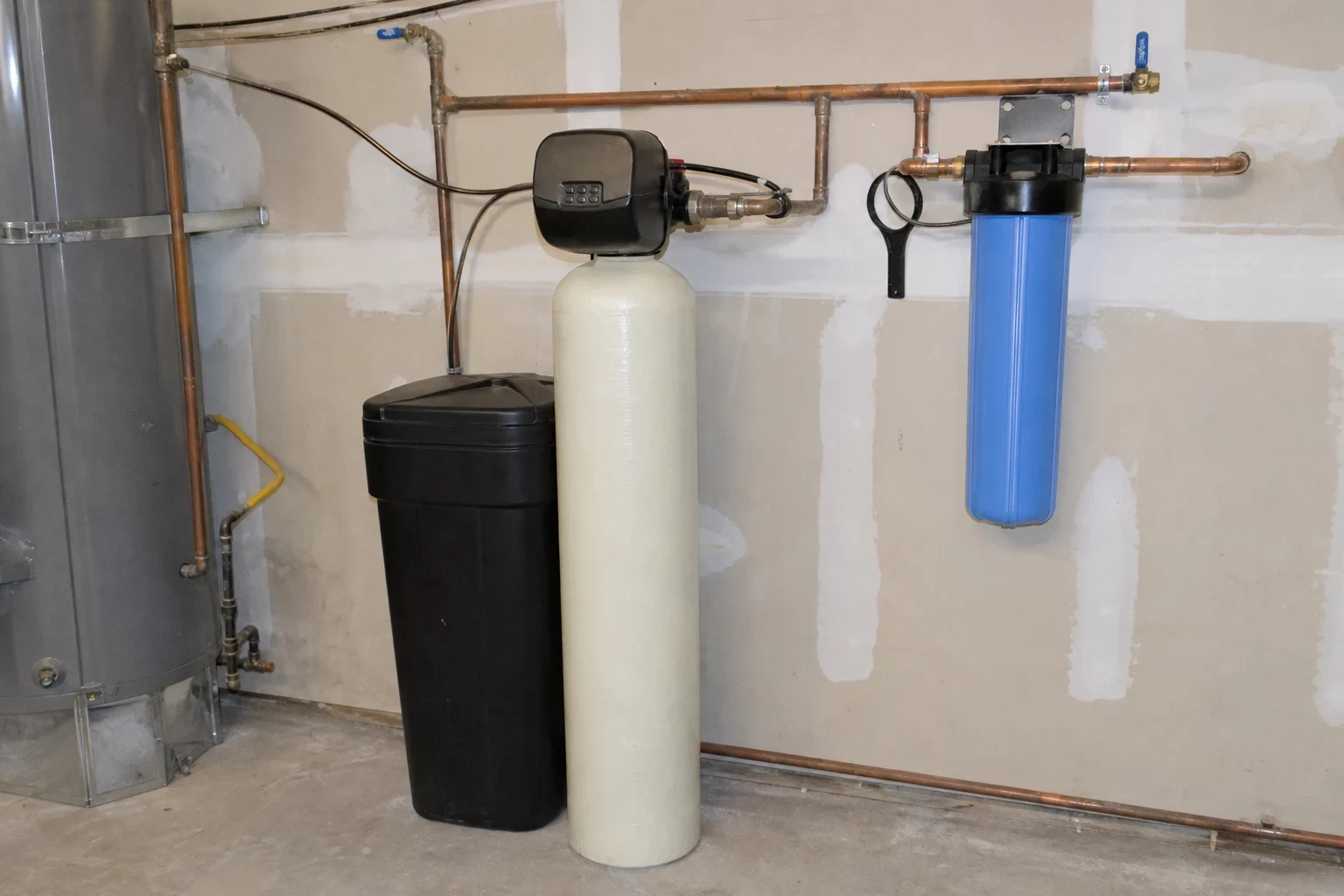
Ready to taste the difference at every tap
Start with a short call about your water. You get a free water test and a free quote for a carbon system.