ServicesIron and sediment filtration
Iron and Sediment Filtration in Grand Prairie
Rust rings in the tub, grit in faucet screens and water that runs cloudy after the lines are flushed. We find where it is coming from, then fit a filter at the main line that stops it before it reaches your fixtures, appliances or laundry.
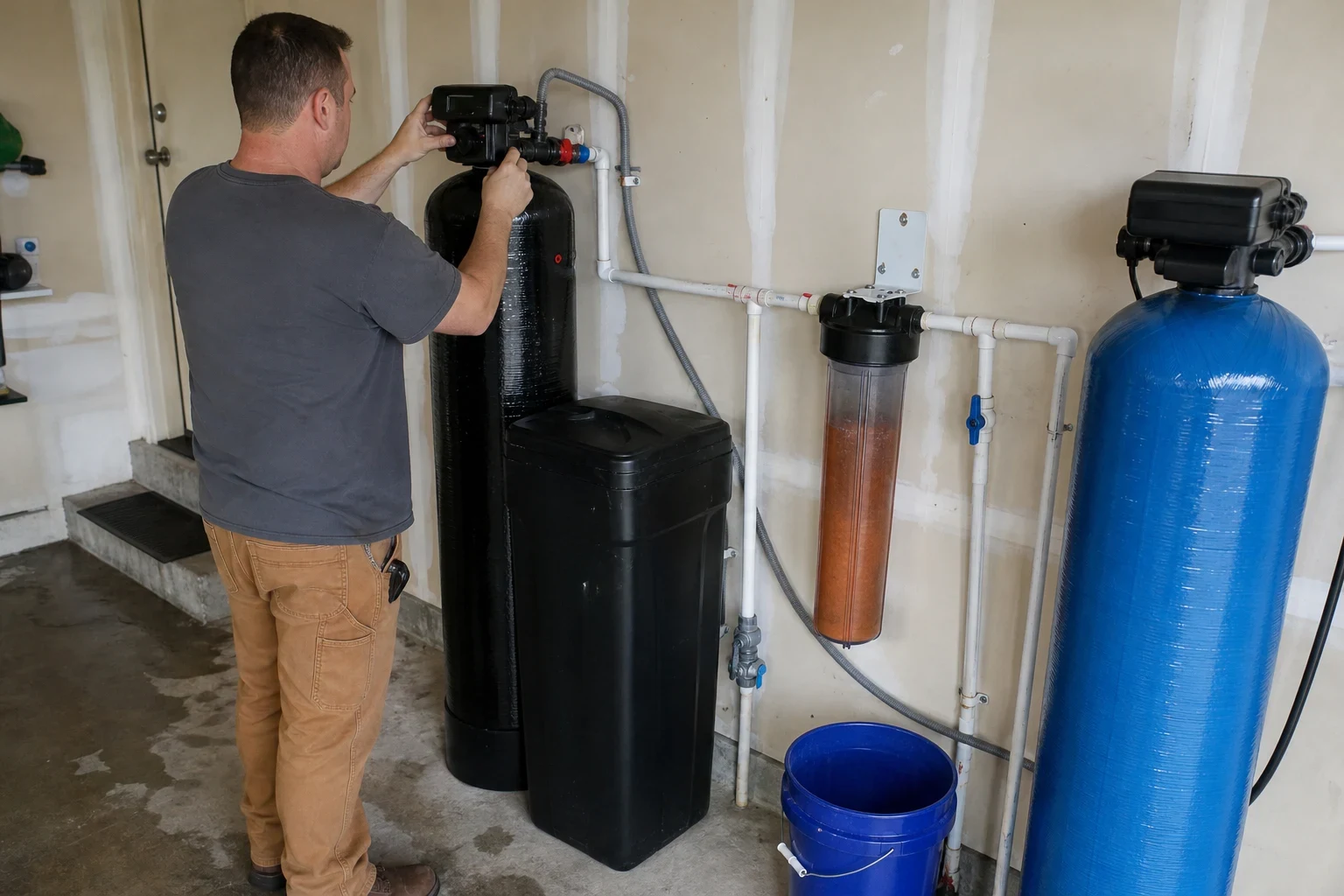
What this filtration does, and when it fits
Rust and grit tend to arrive together, but they are not the same thing. Sediment means solid particles riding along in the water: sand, flakes of scale, chips of rust. Dissolved iron cannot be seen at the tap. It only turns orange once it meets air, so a glass can look perfectly clear and still leave a stain in the sink by morning.
A sediment prefilter catches the particles. An oxidizing iron filter converts dissolved iron into a solid it can trap, then rinses itself clean on a schedule. Many homes need only the first. Some need both. We test before recommending either, because rust can also come from a tired water heater or corroded galvanized pipe, and no filter fixes those.
From the first call to the final cleanup, one person handles your job. That person answers your questions, sets the schedule and comes back to the same notes when the filter is due for service.
What the work includes
A test before any quote
We check iron, sediment load and pH at the tap. Iron filter media works best within a certain pH range, so that number shapes which system we suggest.
Sediment prefilter
A spin-down screen or a cartridge housing, rated to the particle size we actually find. The housing is clear or easy to open so you can see when it needs attention.
Backwashing iron filter
A media tank with an automatic control valve that flushes trapped iron to a drain. We size the tank to your household's water use so flow at the shower stays strong.
Bypass valve and clean plumbing
Every install gets a bypass so water keeps flowing if the system is ever serviced. Fittings are squared, supported and labeled, with no loose tubing left on the floor.
Drain and power connections
The iron filter needs a proper drain with an air gap and a nearby outlet for the control head. We plan both during the estimate so nothing is improvised on install day.
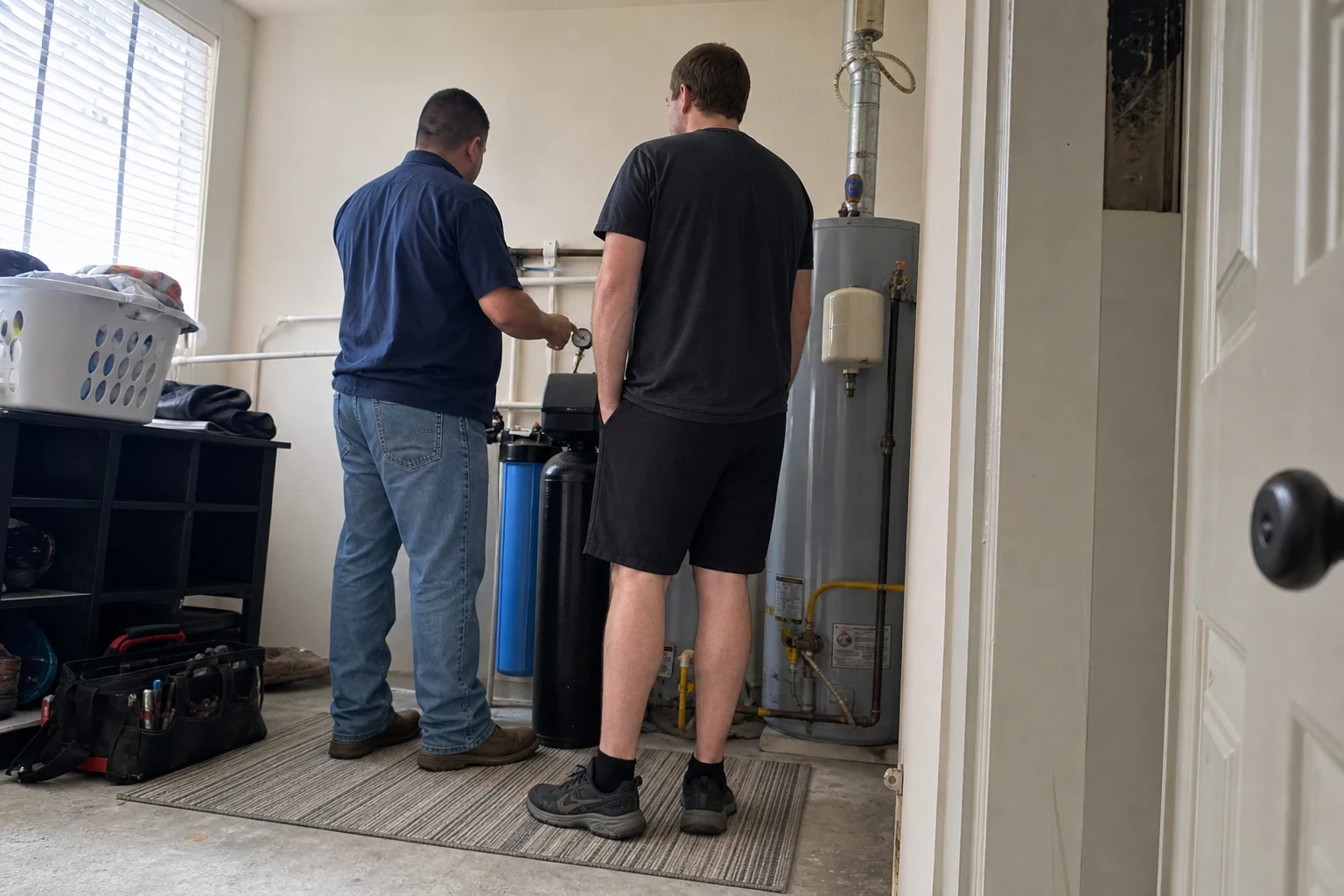
Signs your water carries iron or sediment
- Orange or brown stains
- Rings in toilets, streaks below shower heads and a tint in white laundry point to dissolved iron that oxidizes after it leaves the pipe.
- Clogged aerators and shower heads
- Grit collecting in faucet screens is sediment. It also wears valve cartridges and ice maker inlets over time.
- Cloudy water that slowly clears
- If a glass settles with fine particles at the bottom, the load is high enough to protect your plumbing with a prefilter.
- Metallic taste
- Iron gives water and coffee a sharp, tinny taste even at levels you cannot see.
- Carbon filters wearing out early
- Sediment clogs carbon media quickly. If your whole-house carbon filtration loses pressure well before its rated life, a prefilter usually solves it.
How a job runs
- 1
Estimate and water test
We visit, test at the tap and look at where the main line enters, the water heater and the pipe material. You get a written line-item estimate and a plain answer on whether a filter is the right fix.
- 2
Planning the location
We agree on placement with you, usually the garage or near the main shutoff, and confirm the drain path and power. Your contact person sets a date that works for you.
- 3
Install day
Floor protection goes down before any tools come out. We shut the water off only as long as it takes to fit the bypass and mount the equipment, then set the control valve and run a first backwash so the media starts clean.
- 4
Walkthrough and cleanup
Before we leave you see how the bypass works, when the prefilter needs changing and what the backwash sounds like at night. Packaging and cut pipe leave with us.
What moves the price
Cost follows what the test shows and what your plumbing allows. A sediment prefilter alone is a modest job. An iron filter with its own drain and controls is a larger one, and we explain the difference line by line before you decide.
- Iron level and pH
- Higher iron or lower pH can call for a different media or an air-injection system, which changes the equipment cost.
- Household water use
- More bathrooms and people mean a larger tank to keep pressure steady during backwash cycles.
- Access to the main line
- A straight, open run at the main, often found in the garage, keeps labor down. Cramped spaces or pipe that has to be rerouted add time to the job.
- Drain and electrical
- If there is no drain or outlet within reach, adding them is part of the estimate.
Questions about iron and sediment filtration
- I'm on city water. Can I still have iron in it?
- Yes. Most iron in city-supplied homes picks up along the way, from aging galvanized pipe, a corroding water heater tank or sediment stirred up during main work. That is why we test and look at your plumbing first. If the source is the water heater, we will tell you so instead of selling a filter.
- Will a filter lower my water pressure?
- It shouldn't, as long as the system matches your home. When people notice weaker showers after a filter goes in, the cause is usually a tank that is too small or a cartridge left in long past its change date. We size to your flow and show you when to swap the prefilter.
- How often does it need service?
- Sediment cartridges typically need changing every few months, depending on load. Iron filter media lasts years but benefits from a yearly check of the valve and backwash settings. Our filter replacement and maintenance service covers both.
- Do I need a water softener too?
- Not usually. A softener can remove small amounts of iron, but it is meant for hardness. We only suggest one after a hardness test shows your water calls for it.
- Where does the backwash water go?
- To a drain line with an air gap, often a laundry standpipe or floor drain. The cycle runs briefly, usually overnight, and uses a measured amount of water.
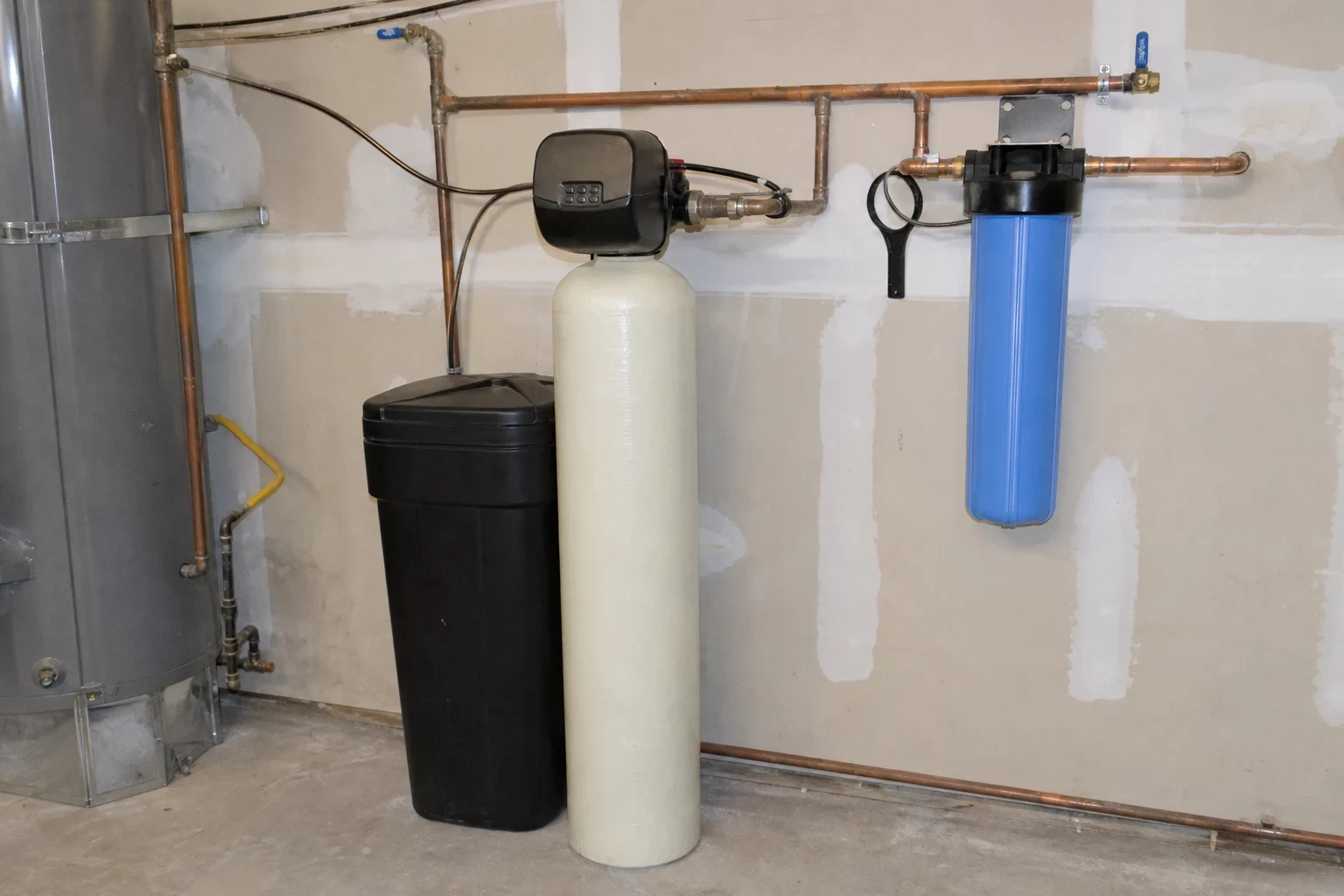
Find out what's behind the stains
Call us about the stains or grit. You get a free water test and a free quote for the fix.