ServicesWater softeners
Water Softeners in Grand Prairie, After a Hardness Test
A softener is worth it when your water is hard enough to leave scale, and not before. We measure hardness at a tap in your home, show you the reading and recommend a softener only when the result supports it. One person handles the job from test to cleanup.
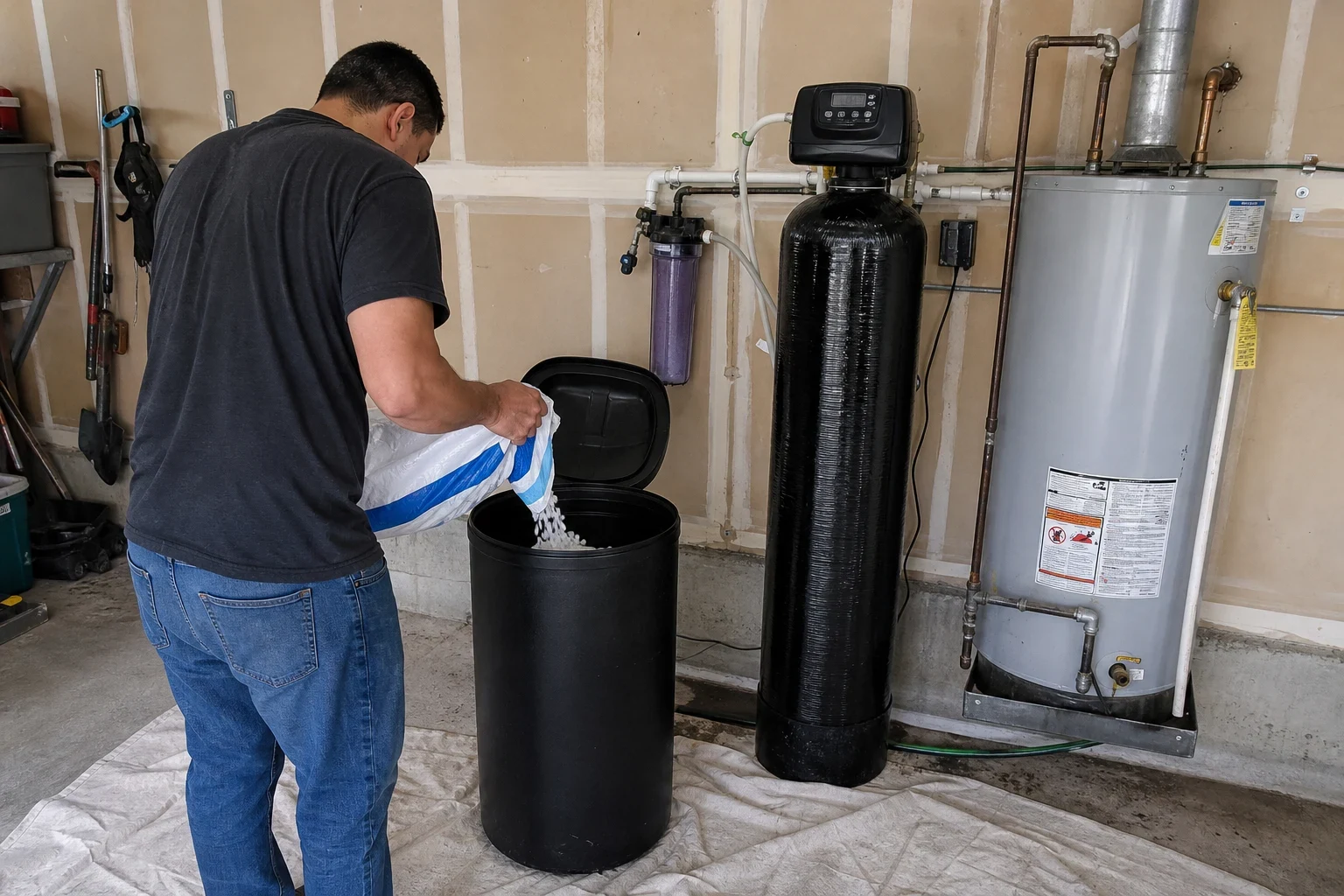
Measure the hardness before buying anything
Softening pulls calcium and magnesium out of your water. Those two minerals are behind the chalky ring at a faucet base, the haze on shower glass and the scale that builds up inside a water heater. A good softener deals with them well, but it also becomes a permanent fixture: a resin tank and a brine tank, regular bags of salt, a drain connection and a patch of floor that stays spoken for.
Hardness depends on the water source and can vary from house to house, and many homes in Grand Prairie and nearby towns like Arlington and Mansfield get little from softening. When your reading comes back low, we tell you that and point you to what fits instead, such as whole-house carbon filtration for chlorine taste. When the reading is high enough, we size the system to your water and to how your household actually uses it.
You work with one person the whole way through. Whoever reads your result also plans the install, is there on the day and takes your questions afterward.
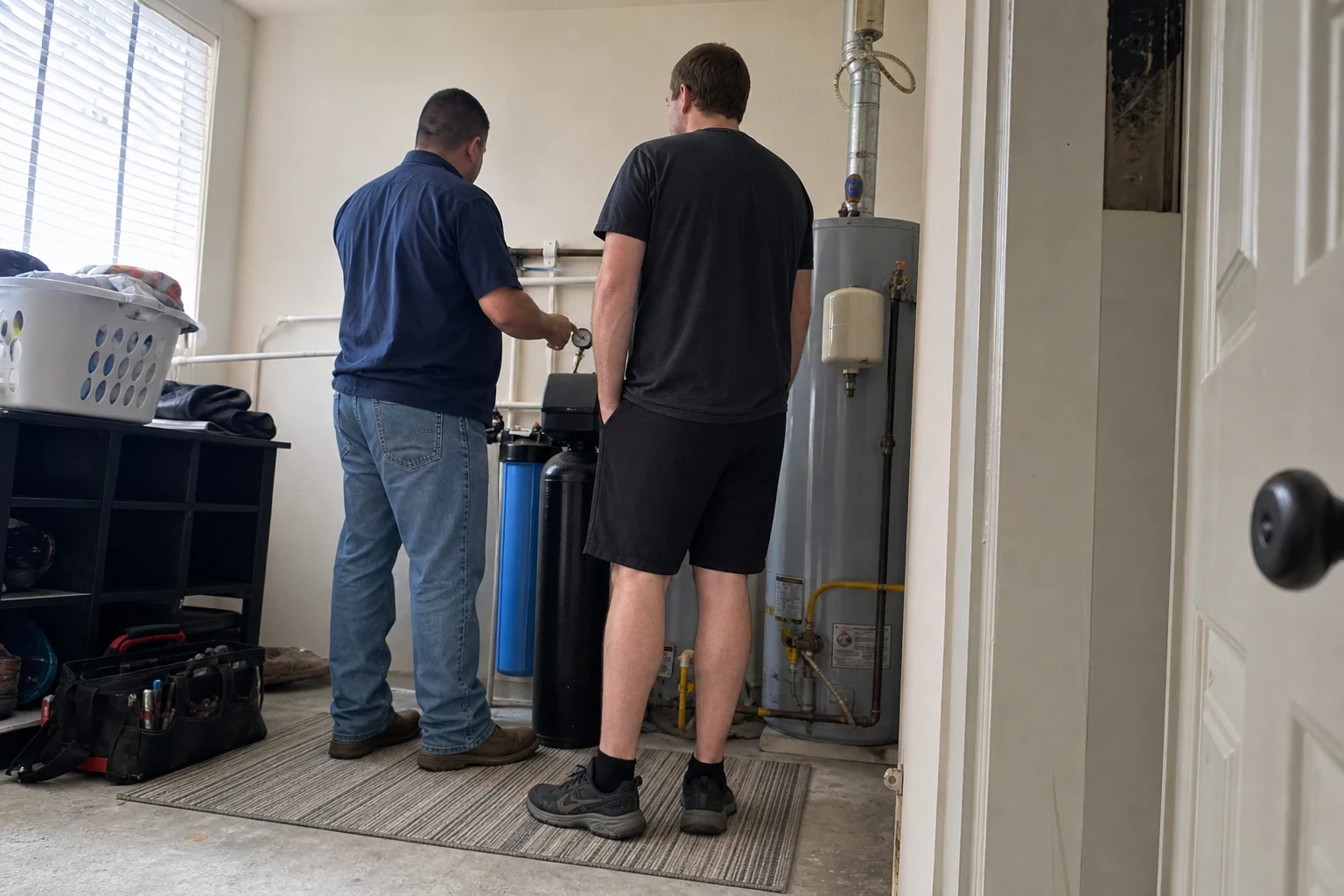
What the work includes
- 01
In-home hardness test
We measure hardness in grains per gallon at a tap in your home and check for iron, which changes how a softener should be set up. You see the reading yourself, not just our summary of it.
- 02
Sizing to your water and use
Capacity depends on hardness, household size and daily water use. An undersized unit regenerates too often and burns through salt, while an oversized one lets resin sit idle. We work through the numbers with you.
- 03
Careful installation
We fit a bypass valve so the system can be isolated, plumb in at the main line where your plumbing allows and run the drain line with a proper air gap. Every joint is made neatly and checked for leaks.
- 04
Programming and first regeneration
The control valve is set to your measured hardness, not a factory default. We run a regeneration cycle and confirm softened water at a tap before we leave.
- 05
Walkthrough and cleanup
We show you how to add salt, read the brine level and use the bypass. Floors are covered while we work, and packaging and old fittings leave with us.
Questions about Water softeners?
Call(972) 833-8937When a hardness test makes sense
Scale around faucets and drains
A crusty white ring at the base of a faucet or around a showerhead is mineral scale. When it comes back within days of a good scrub, hard water is a likely culprit.
Spots on glass and dishes
Cloudy glasses and a film on shower doors that resists ordinary cleaners often point to hard water drying on the surface.
A rumbling water heater
Scale settles at the bottom of a tank and pops as it heats. Over time it cuts efficiency and can shorten the heater's life.
Soap that will not lather
Hard minerals react with soap, so you use more shampoo and detergent, laundry feels stiff and skin can feel dry after a shower.
Weak flow at aerators
Small screens in faucets and showerheads clog with scale first. These signs can have other causes, which is exactly why we test before recommending anything.
How a softener job runs
- 1
Start with a phone call
Describe what you have noticed around the house and roughly when it started. We then arrange a visit to test your water and look over the spots where a system could sit.
- 2
Test and honest recommendation
We test at the tap, explain the result in plain terms and tell you whether a softener makes sense. If it does, you get a written line-item estimate covering the unit, parts and labor.
- 3
Installation day
We cover the floor, shut off the water and let you know how long it will be off. Then we install the bypass, connect the tanks and drain, and add the first salt.
- 4
Setup and checks
We program the valve, run a regeneration and retest a tap to confirm the water is softened. After a final leak check we clean up the area.
- 5
Afterward
Questions go to the same person you have dealt with all along. When it is time for resin checks or pre-filter changes, our filter replacement and maintenance service picks up from there.
What moves the cost of a softener
We do not quote a softener until we have tested your water and seen the install location. Two homes with the same square footage can need quite different systems. Your written estimate lists each part and the labor so nothing arrives as a surprise.
- Capacity and hardness level
- Harder water and larger households need more resin and a bigger tank. Sizing from your test keeps you from paying for capacity you will not use.
- Control valve type
- A metered valve regenerates based on actual water use and tends to save salt and water. A simpler timer valve costs less up front.
- Plumbing at the install spot
- Some homes already have a softener loop plumbed in the garage, which makes the job straightforward. Others need new pipe run from the main line, which adds materials and time.
- Drain and power access
- A softener needs a drain for regeneration water and usually an outlet. If neither is close, extending them adds to the work.
- Pre-filtration
- If the test shows iron or sediment, a pre-filter may be needed to protect the resin. Our iron and sediment filtration service covers that when it applies.
Water softener questions
Do I really need a softener in Grand Prairie?
Maybe not, and that is the reason we test first. Hardness varies, and many homes see little benefit from softening. If your result is low, we will tell you plainly and suggest something that fits better, or nothing at all.
What hardness level makes a softener worth it?
Water under about 3.5 grains per gallon is generally considered soft to slightly hard, and most people notice little difference from softening it. From moderately hard upward, scale and soap problems become noticeable and a softener starts to earn its keep. We show you where your reading falls.
Will softened water taste salty?
Most people do not notice a taste. A softener adds a small amount of sodium in proportion to how hard the water was. If you are watching sodium, under-sink reverse osmosis at the kitchen tap removes it from drinking and cooking water.
Does a softener remove chlorine or other contaminants?
It does not. Softening trades calcium and magnesium for sodium and leaves chlorine where it is. Whole-house carbon filtration is what handles that taste and smell, and our water testing service shows whether anything else deserves attention.
How much upkeep does a softener need?
Check the salt level about once a month and top it up when it runs low. The brine tank benefits from an occasional cleaning, and the resin itself lasts many years with clean water feeding it. We walk you through all of it on install day.
Can the softener go in the garage?
Usually, yes, and it is often the easiest spot. On the rare hard freeze in North Texas, exposed lines and the tank should be protected, and we will point out what to insulate before we leave.
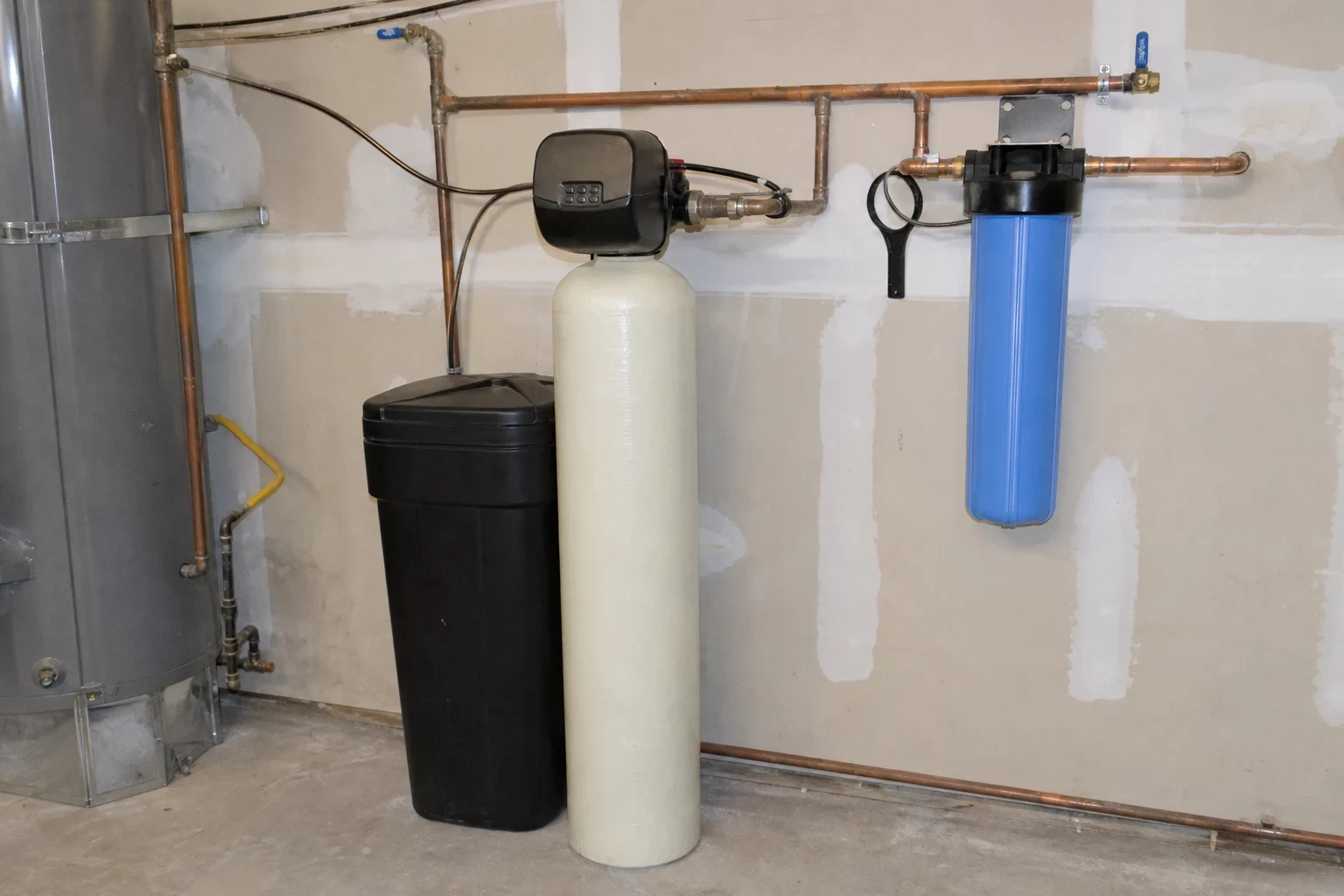
Find out if a softener makes sense for your home
A test answers the question either way. Call for a free water test and a free quote if a softener fits.