ServicesWater testing
Water Testing in Grand Prairie
Before we recommend a filter, we test your water. We screen it at your kitchen tap, send samples to a lab when the question calls for it, and explain every number in plain terms. One person handles your test from the first call to the written results.
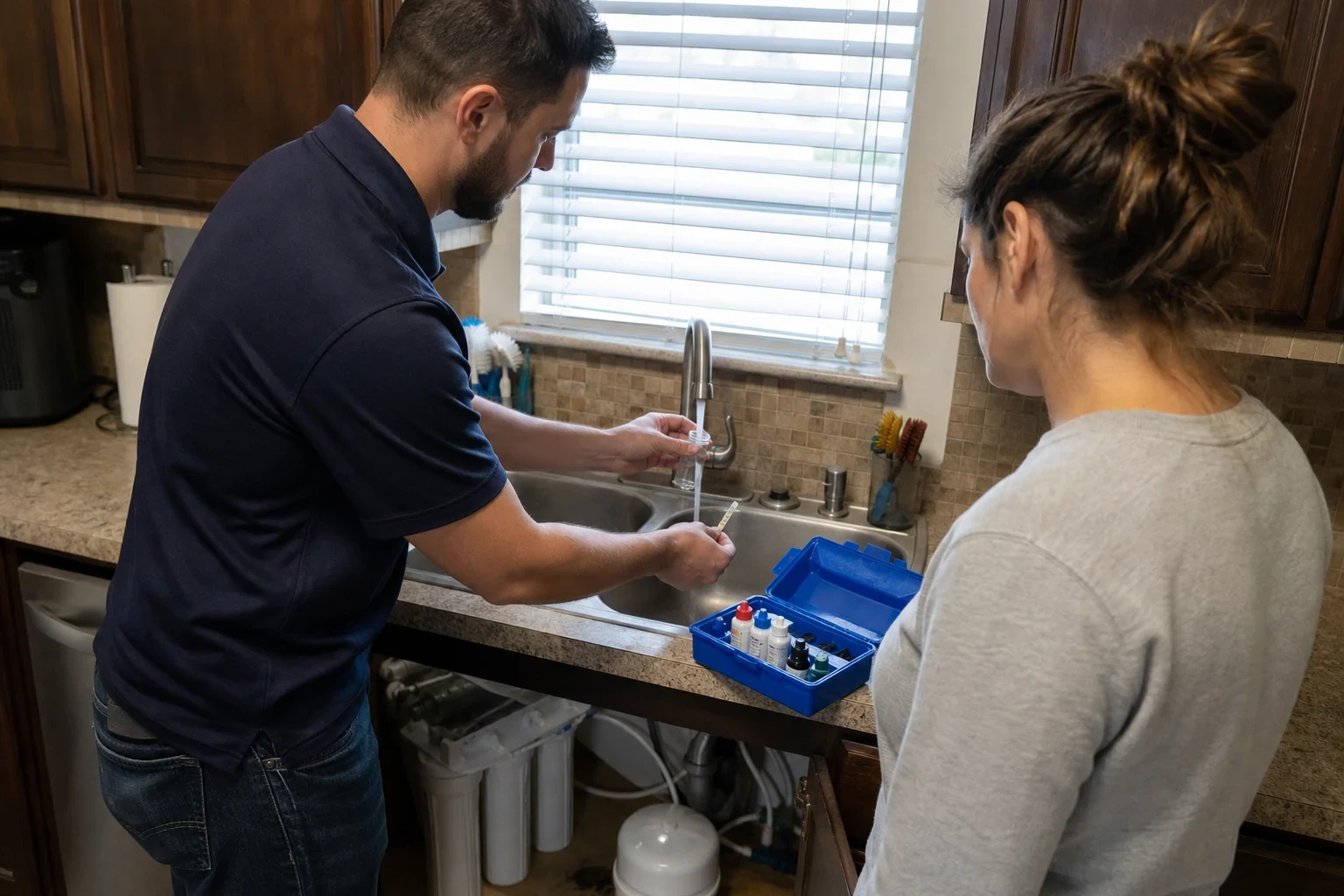
Know what is in your water before you treat it
City water is treated and monitored before it reaches your street. What the utility cannot see is what happens after that: the last stretch of pipe, the fixtures and the water heater inside your home. Taste, odor, spotting and staining usually start there, and so do most questions about lead.
A test turns a vague complaint into a clear answer. Sometimes the answer points to a specific filter. Often it points to something smaller, like a single drinking-water system at the kitchen sink. And sometimes the honest result is that your water is fine and you need nothing at all.
The person you speak with on the phone is the same person who takes your samples and walks you through the results. You will not repeat your concerns to three different people or wait on a callback from someone who never saw your kitchen.
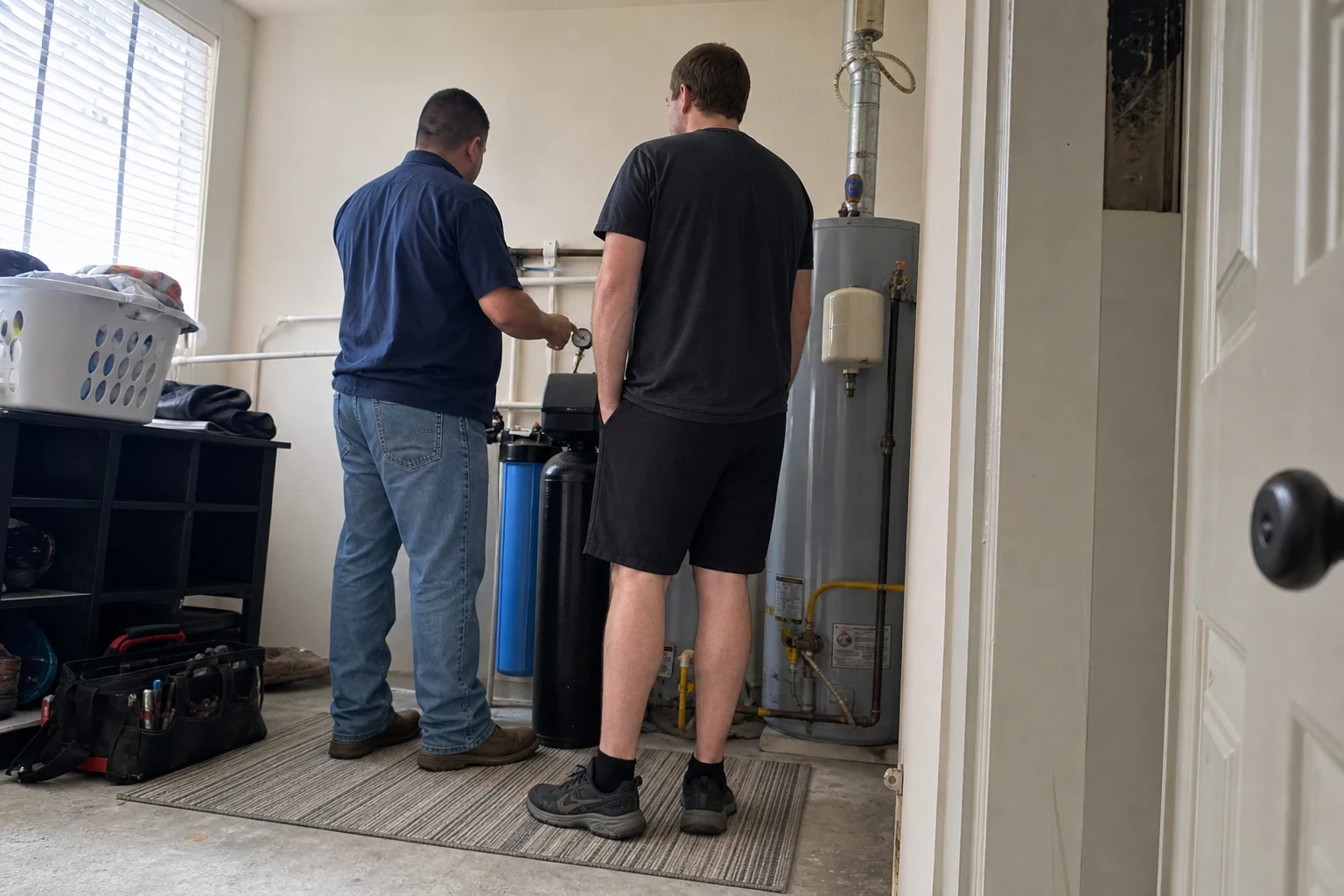
What a water test with us includes
- 01
In-home screening
At your tap we check hardness, chlorine, iron, pH and total dissolved solids. These readings explain most taste, spotting and staining complaints on the same visit.
- 02
Independent lab samples when needed
Some questions, such as lead or bacteria, deserve a proper laboratory analysis rather than a test strip. We collect those samples carefully, label them and send them to an independent lab.
- 03
Sampling from the right taps
Where we sample matters. We usually test the kitchen cold tap and compare it with water at the main line, which tells us whether a problem comes from the supply or from the plumbing inside your home.
- 04
Results explained in person
We go over each reading at your kitchen table, what it means and whether it matters for your family. You get a written summary to keep.
- 05
An honest recommendation
If treatment would help, we tell you which kind and why, with a written line-item estimate. If it would not, we say so.
Questions about Water testing?
Call(972) 833-8937When a water test is worth scheduling
Bottled water has become the habit
Some disinfectant in city water is expected. When the flavor or smell bothers you enough that the family reaches for bottles instead of the tap, a measured reading shows how much is there and whether carbon filtration would take care of it.
Spotty glasses and crusted shower heads
Cloudy dishes, scale building on fixtures and a water heater that seems to struggle all hint at minerals. Get a hardness number first, then decide whether a softener is worth discussing.
Rust-colored rings and dingy whites
Orange or brown marks near drains, inside the toilet bowl or on light laundry usually mean iron. It may come in with the supply or from aging pipes, and testing tells the two apart before iron and sediment filtration enters the conversation.
Plumbing installed before 1986
Copper joints from before the federal lead-free rules may contain lead solder. A first-draw sample sent to a lab gives you a reliable answer.
A change at home
A new baby, a family member with a health condition or simply a move into a new house is a good moment to replace guesses with facts about your drinking water.
How your test day runs
- 1
A short phone conversation
You tell us what you have noticed and how old your plumbing is. We decide together whether an in-home screening is enough or lab samples make sense, and we pick a time.
- 2
Sampling at your home
We arrive with clean bottles and meters, work from the kitchen and the main line, and leave the area as we found it. For a lead test we may ask you not to run the tap for several hours beforehand.
- 3
Readings and first answers
In-home results are ready before we leave, and we explain them on the spot. Lab samples go out the same day.
- 4
Written results and next steps
When lab results return, we call you, go through each figure and send a written summary. Any recommendation comes with a line-item estimate, and there is no pressure to act on it.
How water testing is priced
The price follows the question you want answered. A screening for taste and hardness is quick, while lab analysis adds bottles, shipping and the lab's own fee. You hear the price by phone before anything is scheduled.
- In-home or lab panel
- Meter and reagent readings cost less than a full laboratory analysis. We suggest lab work only when the question needs it.
- Number of samples
- Comparing several taps, or the main line against the kitchen, adds samples and time.
- Specific contaminants
- Lead, bacteria and other targeted tests each have their own lab procedure and fee.
- Follow-up testing
- A second test after a filter is installed confirms it is doing its job. Some homeowners want that check, others do not.
Water testing questions
Isn't city water already tested?
Yes, and the utility's report is worth reading. It reflects water at the treatment plant and across the system, not at your faucet. Pipes, fixtures and the water heater in your home can change taste, color and lead levels, so a test at your tap answers a different question.
Will you try to sell me a filter?
We will tell you what the results show. If your water is in good shape, we say so and leave it there. If something would help, you get a written estimate and time to think it over.
Do I really need a lab test?
Not always. Hardness, chlorine, iron and pH can be measured reliably at your tap. Lead and bacteria are different, and for those we send samples to an independent laboratory.
How long do results take?
In-home readings are ready during the visit. Lab results typically take several business days, and we call you as soon as they arrive.
Should I test before buying a water softener?
Always. Hardness varies, and a softener only makes sense when the numbers support it. Our page on water softeners (after hardness test) explains how we use those results.
Do you test outside Grand Prairie?
Yes. We also work in nearby cities including Arlington, Mansfield, Irving and Duncanville.
Get a clear answer about your water
One call gets you a free test of your tap water and a free quote for anything the results call for.